
Caring isn't the bottleneck. Figuring out what actually helps is.
Almost everyone wants to help others, at least a little. Effective altruism isn't about caring more — it's a simple but demanding question on top of that care: of all the ways I could help, which one helps the most?
Picture walking past a shallow pond and seeing a child drowning in it. Almost everyone would wade in to help, even if it ruined an expensive pair of shoes — the cost is trivial next to a life. The philosopher Peter Singer's famous version of this thought experiment asks an uncomfortable follow-up: if distance and unfamiliarity are the only things separating that child from a child dying of a preventable disease somewhere else in the world, why should distance change what we owe them?
Effective altruism takes that instinct seriously, then adds a second question most of us never ask: given that we can't save everyone, which ways of helping actually save or improve the most lives per euro, per hour, per career? Some interventions, studied carefully, turn out to help a hundred times more than others aimed at the same problem. That gap is the entire reason this is worth thinking about instead of just acting on the first impulse.
Three questions, asked about every problem
Scale
How many individuals are affected, and how severely? A problem affecting millions beats one affecting dozens, all else equal.
Neglectedness
Is almost no one already working on this? The first serious effort on a neglected problem tends to do far more than the thousandth effort on a popular one.
Tractability
Can we actually make progress with realistic effort? Huge and neglected doesn't help if nothing we do moves the needle.
Cause areas the community keeps coming back to
Not the only problems worth working on — but the ones that keep scoring highest on scale, neglectedness, and tractability when researchers look closely.
Global Health & Wellbeing
Malaria alone still kills roughly 600,000 people a year, most of them young children — and proven tools like insecticide-treated bednets prevent it for just a few dollars each. (WHO World Malaria Report; GiveWell research)
Animal Welfare
Tens of billions of land animals are farmed worldwide every year, most on industrial farms — and targeted campaigns have improved conditions for huge numbers of them per dollar spent. (FAO; Giving What We Can research)
Global Catastrophic Risks
From pandemics to nuclear weapons to advanced AI: surveyed experts themselves give non-trivial odds to very bad outcomes this century, in fields almost no one is paid to work on reducing. (80,000 Hours research)
The community keeps looking for promising but neglected angles elsewhere too — climate change and safeguarding democratic institutions are two recent examples.
Small differences in choice, huge differences in outcome
Hover or tap a bar for more detail.
Illustrative multiples, not a specific charity-to-charity comparison — but GiveWell's own research has repeatedly found roughly this order of spread in cost-effectiveness between programs aimed at the very same problem. That gap is the entire reason it's worth a little research before giving, not a reason to give less.
Which cause area speaks to you?
Pick whichever pulls at you most — there's no wrong answer.
Global Health & Wellbeing
A family in a malaria-endemic region can be protected for several years by a net that costs only a few dollars to distribute. It's one of the most rigorously studied, cost-effective interventions GiveWell has found anywhere.
See what we're discussing this semester →Animal Welfare
Because so few resources go toward farmed-animal welfare relative to its scale, campaigns here have reported reaching thousands of animals' worth of improved conditions per dollar spent — among the highest-leverage giving GWWC tracks.
See what we're discussing this semester →Global Catastrophic Risks
Pandemics, nuclear risk, and advanced AI share a pattern: huge stakes, surprisingly few people working on them full-time, and early career-stage people able to move into the field quickly, per 80,000 Hours' research.
See what we're discussing this semester →How much does being born where you were matter?
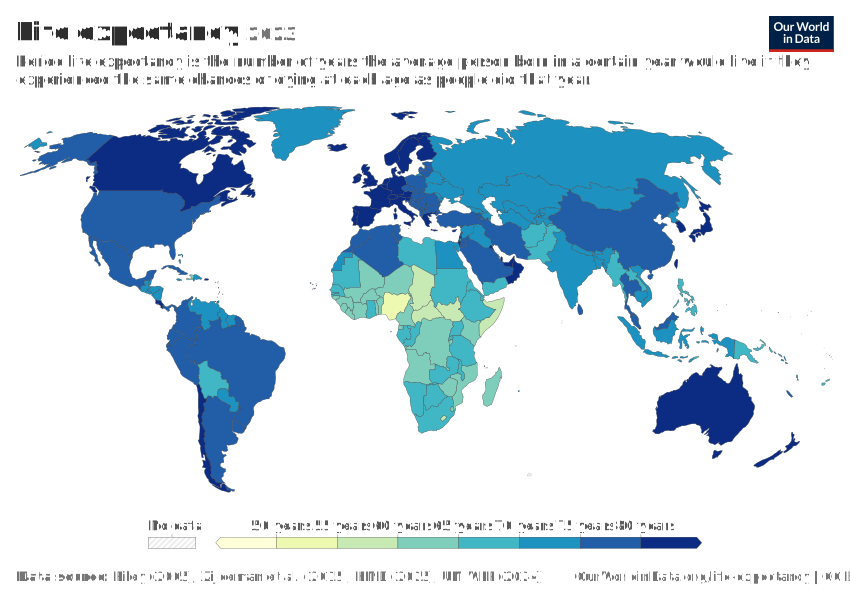
More than almost anything you'll do afterwards. This isn't about income — it's about the starting line.
Everyone reading this already won a kind of lottery just by being born when and where they were. Here's the draw you got — tap below to see a few of the other ways it could have gone.
You get to read this somewhere safe and settled enough to actually think it over, instead of spending today just getting by.
The draw you actually got.
Picture the nearest safe water being a half-hour's walk away — and still not being sure it's clean once you get there. That's daily life for roughly 1 in 4 people worldwide.
Source: WHO/UNICEF Joint Monitoring Programme
Picture your family's entire day — food, rent, everything — running on less than the price of a coffee here. For hundreds of millions of people, that's not a bad day. It's every day.
Source: World Bank international poverty line
Picture being handed a job instead of a backpack at age ten. An estimated 160 million children worldwide grow up doing child labour instead of sitting in a classroom.
Source: ILO & UNICEF
Picture losing your home to a flood or drought you did almost nothing to cause. That's reality in many of the countries hit hardest by climate change, despite contributing almost nothing to the emissions behind it.
Source: UNDP Human Development Report
Picture a disease that's barely a concern here — prevented by one routine childhood jab — still being a real danger where you grew up. Vaccine-preventable diseases still kill hundreds of thousands of children a year outside places like Germany.
Source: WHO immunization data
Small student budget, surprisingly large effect
This isn't a donation ask — it's a sense of scale. Pick something you'd realistically spend money on in a semester.
A long-lasting insecticide-treated bednet costs about $2–5 to distribute (AMF/GiveWell figures) — roughly a dozen or more nets, enough to tuck a dozen families in against malaria-carrying mosquitoes, every night, for years.
On the same basis, that's roughly 25–50 bednets — enough for a small village's worth of households, for years, not weeks.
Roughly 35–80 bednets depending on exact pricing — a genuinely large amount of malaria protection for money most students wouldn't notice losing.
Illustrative, based on publicly published GiveWell/AMF cost estimates. We're not asking you to donate anything right now — just showing what "cost-effective" actually looks like at student-sized amounts.
We didn't invent any of this
Everything above simplifies a much bigger body of research and writing. For the fuller, unsimplified version, these are the actual sources:
effectivealtruism.org
The movement's own explanation of what effective altruism is, its core ideas, and how people put them into practice.
Visit effectivealtruism.org →GiveWell
Independent charity research, with every cost-effectiveness estimate published in full.
Visit GiveWell →Giving What We Can
A community of people who've pledged to give a meaningful share of their income effectively.
Visit Giving What We Can →It's not your bank account. It's your 80,000 hours.
80,000 Hours — the career-advice nonprofit — takes its name from roughly how many working hours sit in an average career. As a student, essentially all of yours are still unspent. Where you point them is plausibly the single biggest decision you'll make for how much good you end up doing — bigger than any donation most people will ever give.
The first step costs you one evening, not a career change and not a bank transfer: